E-commerce Recommender on 85 Million Real Events
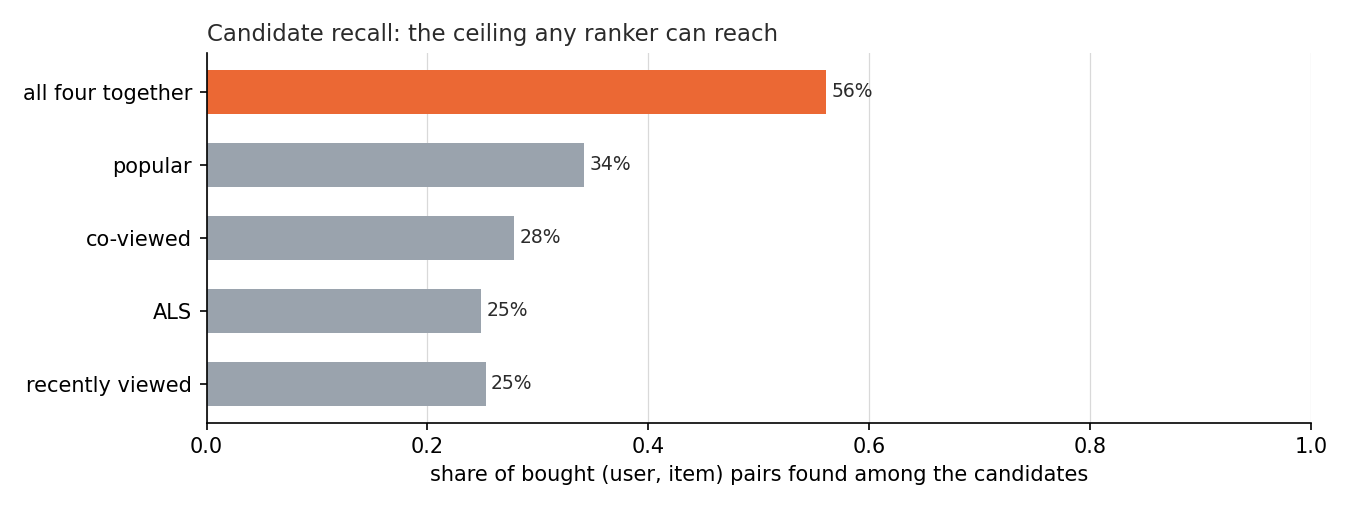
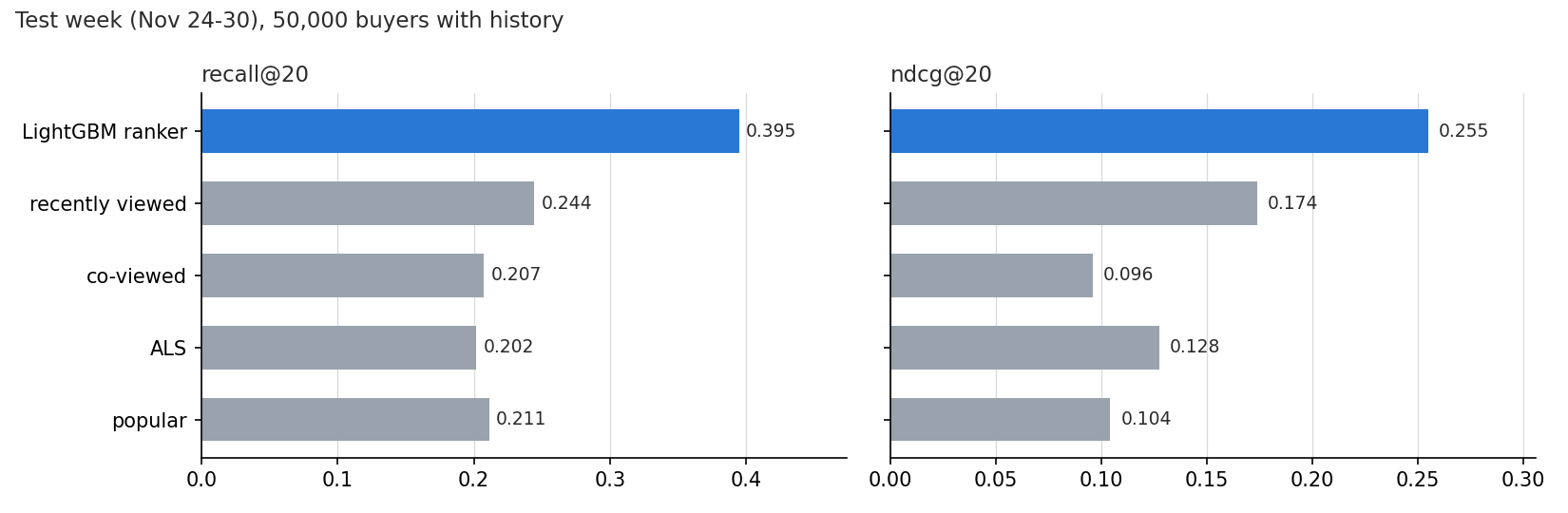
A two-stage recommender (candidate generation, then a learning-to-rank model) trained and evaluated offline on two months of real clickstream from a multi-category online store. For 50,000 buyers in the last week of November, the LightGBM ranker reaches recall@20 of 0.395 against 0.244 for the best single generator, "what the user recently viewed". The ceiling is set before ranking: 71.4% of what people buy that week is an item they had never viewed before, and only 56.0% of bought items appear among any generator's candidates.
This page shows the project's results. The methodology, the design decisions and the limitations are documented in the repository's README.
Results
The ceiling: most purchases are of items never seen before