Chile Mining Ops Agent
*[Version en español: README.es.md](README.es.md)*
This page shows the project's results. The methodology, the design decisions and the limitations are documented in the repository's README.
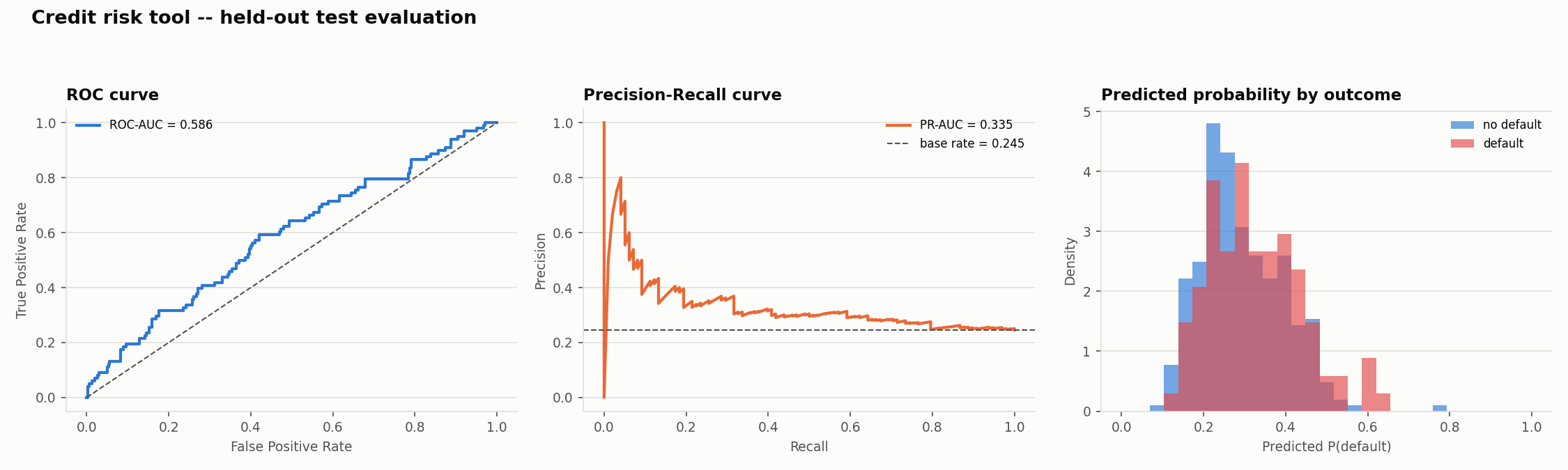
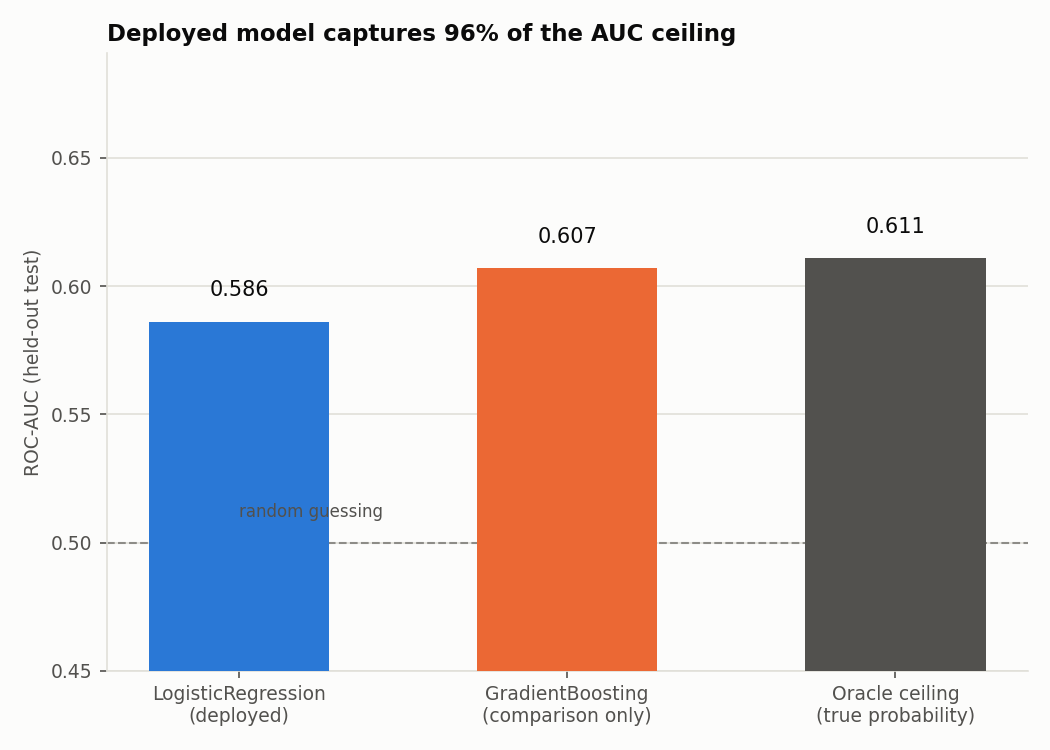
`score_credit_risk` — weak, and now verified to be near-optimal, not just "honest"
`check_maintenance_anomalies` — downtime isn't the whole story
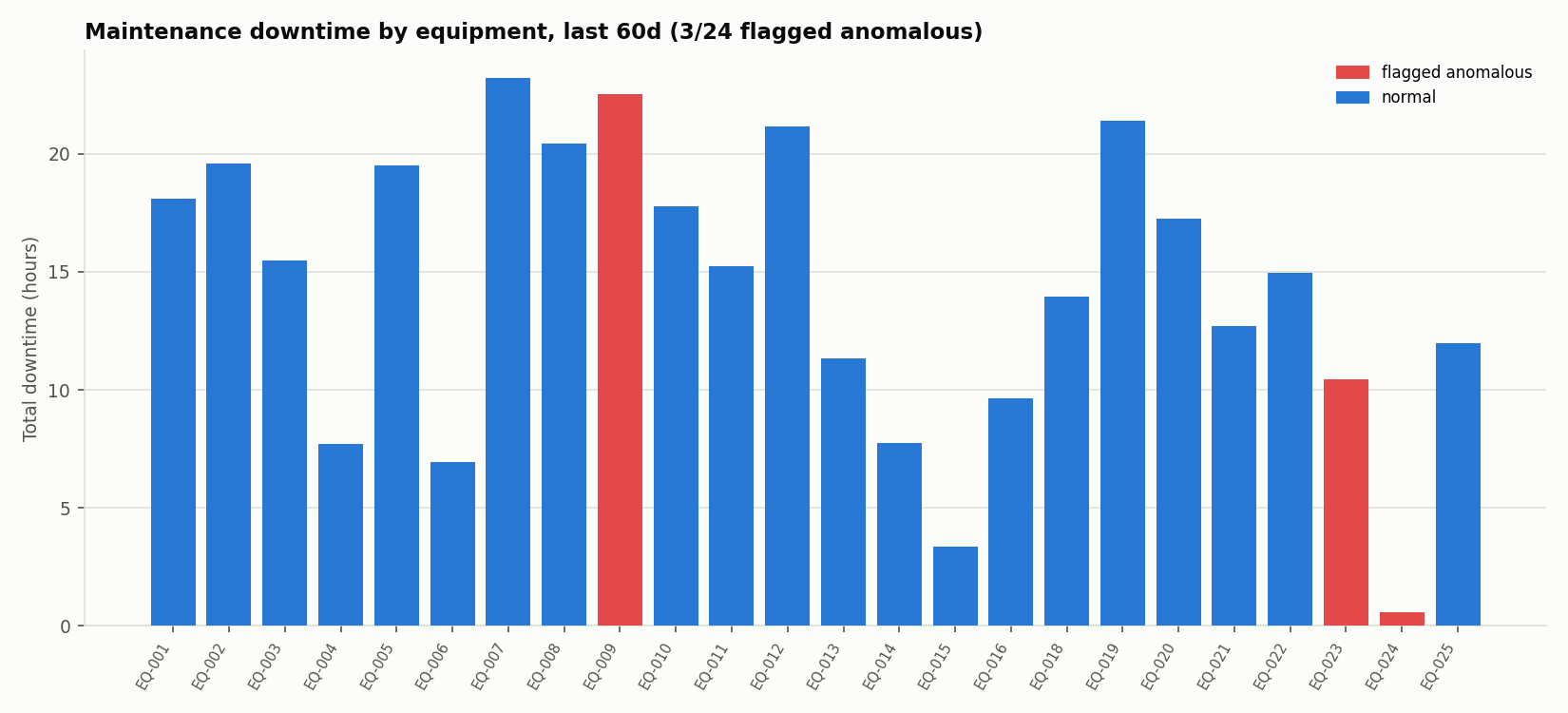
IsolationForest, and the flagged ones are not simply the three with the most downtime — that's the interesting part of this chart. EQ-007 has more total downtime (23.2h) than the flagged EQ-009 (22.6h) but isn't flagged; EQ-023 gets flagged at a mid-range 10.4h, well below several normal bars; and EQ-024 is flagged despite having almost no downtime at all (0.5h) — anomalous for being unusually *low*, not high. That's expected from an Isolation Forest run over multiple maintenance-event features (frequency, severity, downtime) rather than a single downtime threshold, and it's a more realistic signal than "flag whatever has the biggest bar."`get_flotation_summary` / `get_procurement_summary` — the operational backdrop